Gilmer County Dog Registration Information
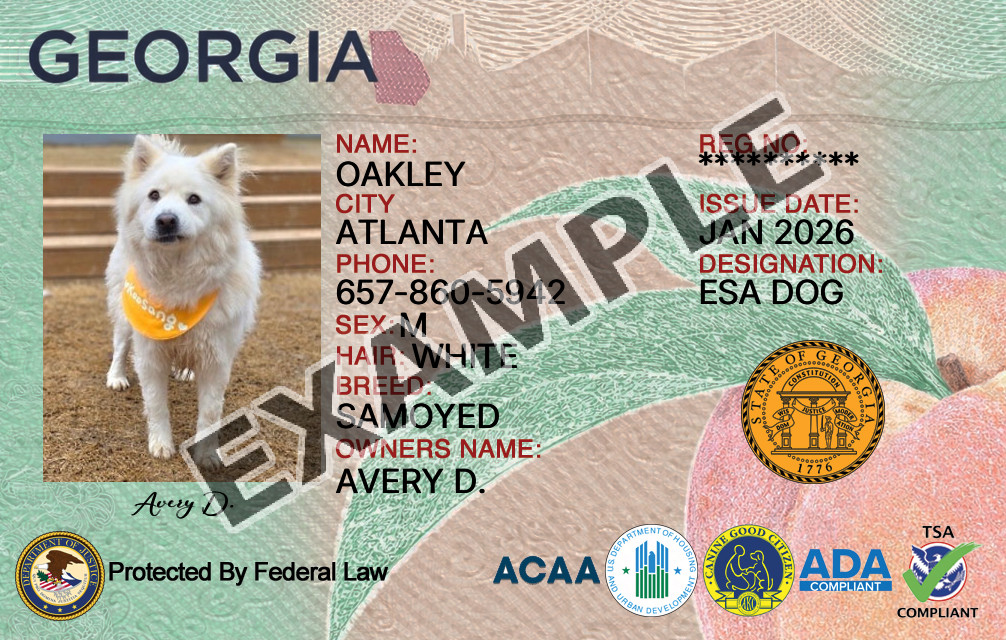
Service Dogs and Emotional Support Animals in Gilmer, Georgia
If you’re asking “where do I register my dog in Gilmer County, Georgia for my service dog or emotional support dog,” it helps to separate three different things: (1) a local dog license or rabies tag process (if required), (2) your dog’s legal status as a service dog under federal and state law, and (3) emotional support animal (ESA) documentation for housing. In Gilmer County, residents typically work with county animal services for animal control and shelter-related matters, and local licensing (when required) is commonly tied to proof of a current rabies vaccination.
- Service dogs and emotional support animals are not “registered” through one universal U.S. federal registry.
- A dog license in Gilmer County, Georgia (when required) is a local process and commonly depends on rabies vaccination documentation.
- Rules can differ by municipality, so residents inside a city (such as Ellijay) may have additional local requirements beyond county-level rules.
Where to Register or License Your Dog in Gilmer County, Georgia
The offices below are official Gilmer County government contacts for animal shelter/animal control services. If you need to confirm whether a dog license, county tag, or specific registration is required for your address in Gilmer County, start with the county’s animal services contacts listed here.
Gilmer County Animal Shelter (Gilmer County Animal Control / Animal Services)
Gilmer County Sheriff’s Office Dispatch (Emergency Animal Control Officer Requests)
Gilmer County Government (General County Contact)
Overview of Dog Licensing in Gilmer County, Georgia
What “registering your dog” usually means locally
In many Georgia counties, “registering” a dog means obtaining a local license tag (sometimes called a county tag) or complying with a county’s rabies-control process. The exact steps vary by jurisdiction, but the most common requirement is proof of a current rabies vaccination from a veterinarian. This is why many residents searching for an “animal control dog license in Gilmer County, Georgia” are ultimately looking for the county process tied to rabies vaccination records and tag issuance.
County vs. city requirements inside Gilmer County
Gilmer County includes areas that may fall within municipal boundaries (for example, parts of Ellijay) and many areas that are unincorporated county. In Georgia, municipalities can adopt additional animal ordinances. If you live inside city limits, you may have a city requirement in addition to county expectations. When in doubt, start with the county animal shelter/animal control office and confirm whether your address has any city-level requirement for a dog license in Gilmer County, Georgia.
What You Need Before Registering a Dog
Documents commonly requested
While dog licensing requirements in Gilmer County, Georgia can depend on your location and the current county procedures, most local licensing systems ask for some combination of the items below:
- Rabies vaccination certificate showing the vaccination date and expiration (or next due date), and the veterinarian/clinic information
- Proof of ownership (the dog’s identifying information, microchip number if available, adoption paperwork if applicable)
- Owner identification (government-issued ID)
- Proof of residency (especially if the county offers resident-only fees or services)
- Spay/neuter documentation (if fee schedules vary based on altered vs. unaltered pets)
A note about rabies and public health
Rabies control in Georgia involves public health responsibilities, and counties often require current rabies vaccination for dogs. Even when a “license” isn’t a separate annual permit in the way some states do it, proof of rabies vaccination and an associated tag or certificate is the most common baseline expectation for dogs living in the community.
Steps to Register or License a Dog in Gilmer County, Georgia
Step-by-step checklist
- Confirm your jurisdiction. Determine whether your residence is in unincorporated Gilmer County or within a municipality (such as Ellijay). If you’re not sure, ask when you call animal services.
- Get or update rabies vaccination. Schedule rabies vaccination with a licensed veterinarian. Keep the rabies certificate in a safe place and consider keeping a photo on your phone for quick reference.
- Contact Gilmer County Animal Shelter / Animal Control. Ask where and how the county issues dog license tags or rabies tags (in-person steps, required documents, and current fees if any).
- Bring supporting documents. Take your rabies certificate and ID (and any proof of residency/spay-neuter documentation if applicable).
- Pay any required fee and receive your documentation/tag. If a tag is issued, ask whether it should be attached to the dog’s collar and whether you need to renew annually or on a different schedule.
- Store records for housing, travel, and emergencies. Keep rabies paperwork and any local tag/receipt with your pet records, and update them when your dog’s rabies vaccination is boosted.
Service Dog Laws in Gilmer County, Georgia
No universal “service dog registration” requirement
Service dogs are not registered through a single federal government registry in the United States. Instead, a service dog is defined by what the dog does: a dog individually trained to perform tasks for a person with a disability. Your rights and responsibilities are based on applicable laws (including federal rules), not a purchased certificate or online registration number.
Local licensing and public health rules still apply
Even when a dog is a service dog, it may still need to meet local public health and animal-control requirements (for example, maintaining current rabies vaccination records and complying with local leash/at-large rules). In other words, “service dog” status typically does not replace the need to follow county animal rules that apply to all dogs in Gilmer County, Georgia.
Emotional Support Animal Rules in Gilmer County, Georgia
What an ESA is (and what it is not)
An emotional support animal (ESA) is an animal that provides comfort or support that may help with a person’s health condition, primarily recognized in housing contexts when appropriate documentation is provided. ESAs are not the same as service dogs, and ESA status does not automatically provide public-access rights to enter places where pets are not allowed.
Licensing vs. housing documentation
“Registering” an ESA is often misunderstood. In practice, you typically handle two separate items:
- Local animal rules (rabies vaccination, any local dog license tag, and general animal control compliance)
- Housing documentation (documentation requested by a landlord or housing provider consistent with fair housing rules)
Comparison: Dog License vs. Service Dog vs. Emotional Support Animal
| Category | What it is | Who issues it / who determines it | Common proof | Typical purpose |
|---|---|---|---|---|
| Dog license / county tag (local) | A local licensing or tagging process (often tied to rabies vaccination compliance) for dogs living in a county/city. | A local government office (often animal control/animal services or a related local department). | Rabies vaccination certificate; ID; possibly proof of residency and spay/neuter documentation. | Public health compliance, identification of owned pets, and supporting animal services programs. |
| Service dog (legal status) | A dog individually trained to do work or perform tasks for a person with a disability. | Determined by the handler’s disability-related need and the dog’s task training; not assigned by a universal registry. | Generally no mandatory “registration card.” In many situations, you may be asked limited questions about tasks; local rabies documentation may still be relevant for health compliance. | Disability-related assistance in daily life; access rights in many public settings under applicable laws. |
| Emotional support animal (ESA) | An animal that provides emotional support that alleviates one or more symptoms of a person’s condition (most commonly in housing contexts). | Not a universal registry; typically supported by documentation from a qualified health professional as needed for housing. | Housing-related documentation as requested by a housing provider; local rabies certificate for animal compliance. | Housing accommodations (when applicable); generally not a public-access designation. |
Tip: If your main goal is to comply with local rules, focus first on obtaining and maintaining current rabies vaccination records and confirming whether your address requires a local dog license in Gilmer County, Georgia.
Frequently Asked Questions
What You May Need
Disclaimer
Local laws, fees, office locations, and contact details can change. Residents should verify the most current information with their local animal services or licensing office in Gilmer County, Georgia.
Local SEO Quick Reference
- Where to register a dog in Gilmer County, Georgia: start with the county animal shelter/animal control contact above.
- Dog license in Gilmer County, Georgia: commonly connected to rabies vaccination documentation and local tag issuance.
- Animal control dog license Gilmer County, Georgia: animal services can confirm current licensing/tag steps for your address.
- Dog licensing requirements Gilmer County, Georgia: may differ inside municipalities vs unincorporated county.
Register A Dog In Other Georgia Counties
Select your county below to get started with your dog’s ID card. Requirements and license designs may vary by county, so choose your location to see the correct options and complete your pup’s registration.
- Appling Dog License Cards
- Atkinson Dog License Cards
- Bacon Dog License Cards
- Baker Dog License Cards
- Baldwin Dog License Cards
- Banks Dog License Cards
- Barrow Dog License Cards
- Bartow Dog License Cards
- Ben Hill Dog License Cards
- Berrien Dog License Cards
- Bibb Dog License Cards
- Bleckley Dog License Cards
- Brantley Dog License Cards
- Brooks Dog License Cards
- Bryan Dog License Cards
- Bulloch Dog License Cards
- Burke Dog License Cards
- Butts Dog License Cards
- Calhoun Dog License Cards
- Camden Dog License Cards
- Candler Dog License Cards
- Carroll Dog License Cards
- Catoosa Dog License Cards
- Charlton Dog License Cards
- Chatham Dog License Cards
- Chattahoochee Dog License Cards
- Chattooga Dog License Cards
- Cherokee Dog License Cards
- City of Athens Dog License Cards
- City of Augusta Dog License Cards
- City of Columbus Dog License Cards
- City of Cusseta Dog License Cards
- City of Georgetown Dog License Cards
- City of Macon Dog License Cards
- City of Preston Dog License Cards
- City of Statenville Dog License Cards
- Clarke Dog License Cards
- Clay Dog License Cards
- Clayton Dog License Cards
- Clinch Dog License Cards
- Cobb Dog License Cards
- Coffee Dog License Cards
- Colquitt Dog License Cards
- Columbia Dog License Cards
- Cook Dog License Cards
- Coweta Dog License Cards
- Crawford Dog License Cards
- Crisp Dog License Cards
- Dade Dog License Cards
- Dawson Dog License Cards
- Decatur Dog License Cards
- DeKalb Dog License Cards
- Dodge Dog License Cards
- Dooly Dog License Cards
- Dougherty Dog License Cards
- Douglas Dog License Cards
- Early Dog License Cards
- Echols Dog License Cards
- Effingham Dog License Cards
- Elbert Dog License Cards
- Emanuel Dog License Cards
- Evans Dog License Cards
- Fannin Dog License Cards
- Fayette Dog License Cards
- Floyd Dog License Cards
- Forsyth Dog License Cards
- Franklin Dog License Cards
- Fulton Dog License Cards
- Glascock Dog License Cards
- Glynn Dog License Cards
- Gordon Dog License Cards
- Grady Dog License Cards
- Greene Dog License Cards
- Gwinnett Dog License Cards
- Habersham Dog License Cards
- Hall Dog License Cards
- Hancock Dog License Cards
- Haralson Dog License Cards
- Harris Dog License Cards
- Hart Dog License Cards
- Heard Dog License Cards
- Henry Dog License Cards
- Houston Dog License Cards
- Irwin Dog License Cards
- Jackson Dog License Cards
- Jasper Dog License Cards
- Jeff Davis Dog License Cards
- Jefferson Dog License Cards
- Jenkins Dog License Cards
- Johnson Dog License Cards
- Jones Dog License Cards
- Lamar Dog License Cards
- Lanier Dog License Cards
- Laurens Dog License Cards
- Lee Dog License Cards
- Liberty Dog License Cards
- Lincoln Dog License Cards
- Long Dog License Cards
- Lowndes Dog License Cards
- Lumpkin Dog License Cards
- Macon Dog License Cards
- Madison Dog License Cards
- Marion Dog License Cards
- McDuffie Dog License Cards
- McIntosh Dog License Cards
- Meriwether Dog License Cards
- Miller Dog License Cards
- Mitchell Dog License Cards
- Monroe Dog License Cards
- Montgomery Dog License Cards
- Morgan Dog License Cards
- Murray Dog License Cards
- Muscogee Dog License Cards
- Newton Dog License Cards
- Oconew Dog License Cards
- Oglethorpe Dog License Cards
- Paulding Dog License Cards
- Peach Dog License Cards
- Pickens Dog License Cards
- Pierce Dog License Cards
- Pike Dog License Cards
- Polk Dog License Cards
- Pulaski Dog License Cards
- Putnan Dog License Cards
- Quitman Dog License Cards
- Rabun Dog License Cards
- Randolph Dog License Cards
- Richmond Dog License Cards
- Rockdale Dog License Cards
- Schley Dog License Cards
- Screven Dog License Cards
- Seminole Dog License Cards
- Spalding Dog License Cards
- Stephens Dog License Cards
- Stewart Dog License Cards
- Sumter Dog License Cards
- Talbot Dog License Cards
- Taliaferro Dog License Cards
- Tattnall Dog License Cards
- Taylor Dog License Cards
- Telfair Dog License Cards
- Terrell Dog License Cards
- Thomas Dog License Cards
- Tift Dog License Cards
- Toombs Dog License Cards
- Towns Dog License Cards
- Treutlen Dog License Cards
- Troup Dog License Cards
- Turner Dog License Cards
- Twiggs Dog License Cards
- Union Dog License Cards
- Upson Dog License Cards
- Walker Dog License Cards
- Walton Dog License Cards
- Ware Dog License Cards
- Warren Dog License Cards
- Washington Dog License Cards
- Wayne Dog License Cards
- Webster Dog License Cards
- Wheeler Dog License Cards
- White Dog License Cards
- Whitfield Dog License Cards
- Wilcox Dog License Cards
- Wilkes Dog License Cards
- Wilkinson Dog License Cards
- Worth Dog License Cards
